November 4, 2026
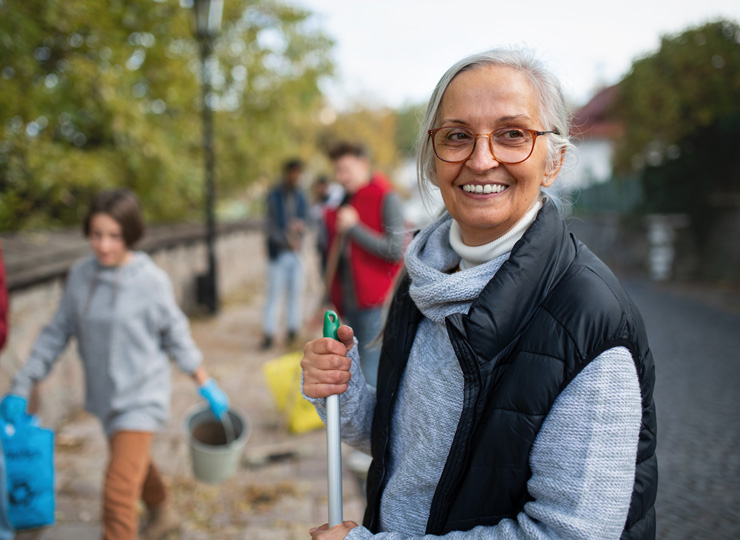
Even modest amounts of time spent doing volunteer work or helping others outside the home may be good for the brain, according to a new report. Volunteer activities may be especially beneficial for those at increased genetic risk of Alzheimer’s disease.
For the study, researchers analyzed health data from nearly 18,000 men and women who were part of the Health and Retirement Study, a large and long running study of the health of a nationally representative sample of older Americans. They ranged in age from 51 to 74. Those in the study underwent regular tests of thinking and memory skills.
The researchers also assessed participants’ engagement in various types of volunteer work, including how many hours they typically spent in these activities. Formal volunteer work was evaluated by asking whether participants “spent any time in the past 12 months doing volunteer work for religious, educational, health-related or other charitable organizations?” The researchers also measured helping others more informally with the question: “Did you spend any time in the past 12 months helping friends, neighbors, or relatives who did not live with you and did not pay you for the help?”
The researchers followed those in the study for over two decades, focusing on people who carried the APOE-E4 gene variant. People who carry one or two copies of this gene variant are at increased risk of developing Alzheimer’s disease and are more likely to show age-related declines in thinking and memory skills, although not everyone who carries the gene variant ultimately develops dementia.
The researchers found that those who regularly volunteered or helped others outside the home had substantially slower declines in memory and thinking skills compared to their peers who did not engage in these activities. The association was strongest among people who carried the APOE-E4 gene variant, who were at the highest genetic risk for Alzheimer’s. The researchers estimated that over the 22-year follow up period, two to four hours of volunteer work per week delayed cognitive decline by an average of about two years.
“Very few pharmaceutical or lifestyle approaches have been shown to slow the decline driven by this gene variant,” said Sae Hwang Han, the study’s lead author and an associate professor of human development and family sciences at the University of Texas at Austin. “But we found helping others, a free, accessible behavior, was linked to markedly slower cognitive decline for this group.” The findings were published in the journal Alzheimer’s and Dementia.
The findings suggest that opportunities to contribute to others’ lives could be an important component of healthy aging, particularly for those at heightened genetic risk for Alzheimer’s disease. They build on earlier evidence suggesting that volunteering may be one more way to help protect against the ravages of a disease like Alzheimer’s. Previous studies have shown, for example, that older men and women who did volunteer work several times a week had better memory and thinking skills than their peers who volunteered less than once a month.
Volunteer activities allow older adults to be more physically active and provide cognitive stimulation. Volunteering also promotes social interaction and can help to combat loneliness. Helping others may also be a way to alleviate stress. All these activities are known to be beneficial for brain health and are associated with a lower risk for Alzheimer’s disease.
If you are interested in volunteering, websites like AARP, Volunteer Match, AmeriCorps, Idealist and United Way can help you find opportunities in your community. If formal volunteer work is not your preference, reach out to friends and neighbors who could use your help. The type of activity you choose is less important than finding an activity that you find enjoyable and personally meaningful, experts say.
By ALZinfo.org, The Alzheimer’s Information Site. Reviewed by Eric Schmidt, Ph.D. Fisher Center for Alzheimer’s Research Foundation at The Rockefeller University.
Source: Sae Hwang Han, Jessica Denielle Faul: “Prosocial helping behaviors attenuate accelerated cognitive decline driven by APOE E4.” Alzheimer’s and Dementia: The Journal of the Alzheimer’s Foundation, September 23, 2026