
September 9, 2026
Experts agree that physical activity is good for overall health, including the health of the brain. But where and when we engage in that activity—whether it’s at work or in our free time—may make a difference when it comes to brain health.
A new analysis found that people who took part in physical activities or sports as part of their leisure time choices had a lower risk of developing Alzheimer’s disease or other forms of dementia down the road. Those who had physically demanding jobs requiring lots of physical exertion, on the other hand, had an increased dementia risk.
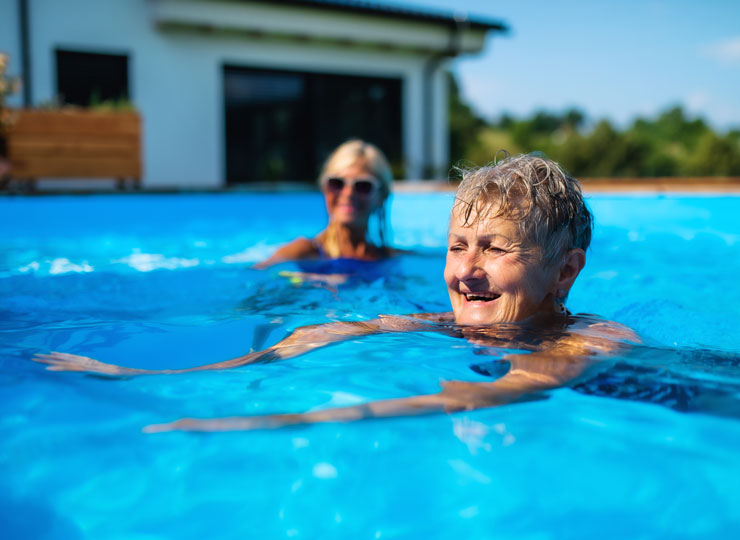
The study results suggest that physical activities like taking a walk with a friend, going for a swim or bike ride, or playing a game of pickup basketball may provide brain benefits that activities like job-related heavy lifting, hammering or heaving do not.
“The findings challenge the long-held assumption that ‘every move counts’ for brain health,” said study author Natan Feter, a postdoctoral fellow at the University of Southern California.
For the study, researchers pooled data from 74 studies that looked at health and physical activity levels among some 4.2 million men and women living in 30 countries. They ranged in age from 45 to 93. Study participants were tracked for an average of around 10 years.
The researchers found that people who engaged in higher levels of leisure-time physical activity had a 24 percent lower risk of dementia than those who were least active. Household physical activities like cleaning or doing laundry also appeared beneficial for brain health, although only one of the studies looked specifically at such domestic activities.
In contrast, people who engaged in higher levels of physical activity as a demand of their jobs had a 20 percent higher dementia risk. People who were physically active while commuting to their jobs also had a slightly elevated dementia risk, although the data on work commuters was limited.
The findings, published in The Lancet Public Health, suggest that why we move may play a role in how that movement affects our brains. Recreational activities, the authors note, are typically self-directed. They can be enjoyed at a leisurely pace or intensity at a time of our choosing and can be great for relieving stress. Many people also opt to work out or engage in sports or fitness classes with friends or gym buddies, and studies have shown that social interaction is critical for keeping the brain in good working order as we age.
A physically demanding job, on the other hand, may involve heavy lifting, strenuous labor or prolonged standing, with limited recovery time or rest. There may be little control over working conditions, with greater exposure to workplace hazards like high levels of noise or air pollution. Workers in these jobs may also have fewer opportunities for recreational exercise because of time constraints and fatigue, all of which may lead to higher stress levels that take a toll on the brain over time.
“When it comes to protecting the brain, the context of physical activity may matter just as much as movement itself,” said study author David Raichlen, who leads the Evolutionary Biology of Physical Activity Lab at USC. “Improving access to safe parks, walking trails and recreational facilities, ensuring people have adequate leisure time for exercise, and reducing harmful workplace exposures may ultimately prove as important as promoting physical activity itself.”
The bottom line is that all of us should, whenever possible, prioritize some kind of physical activity in our free time. Go for a walk with the kids or your dog. Join a gym or weekend sports league. Work in the garden, or hop on a bike to go the local market. Your brain may thank you in the long run.
By ALZinfo.org, The Alzheimer’s Information Site. Reviewed by Eric Schmidt, PhD, of The Fisher Center lab at The Rockefeller University.
Source: Natan Feter PhD; Paula Iso Markku, PhD; Tiladia Markarian, BSc; et al: “Domain-specific physical activity levels and risk of dementia: a systematic review and meta-analysis.” The Lancet Public Health, August 18, 2026